
Two approval systems run the world's headlights: DOT in the United States and ECE (ECE R112 / R149) across Europe and most other markets. They measure the same thing — a safe beam — but with different limits, different marks, and different paperwork. Mix them up and a container gets held at customs or a retailer gets fined. At Chedina LED, this is the first question our technical team asks before quoting an export order — the answer changes the mark on the glass, the certificate in the file and sometimes the whole SKU.
The Core Difference in Plain Terms
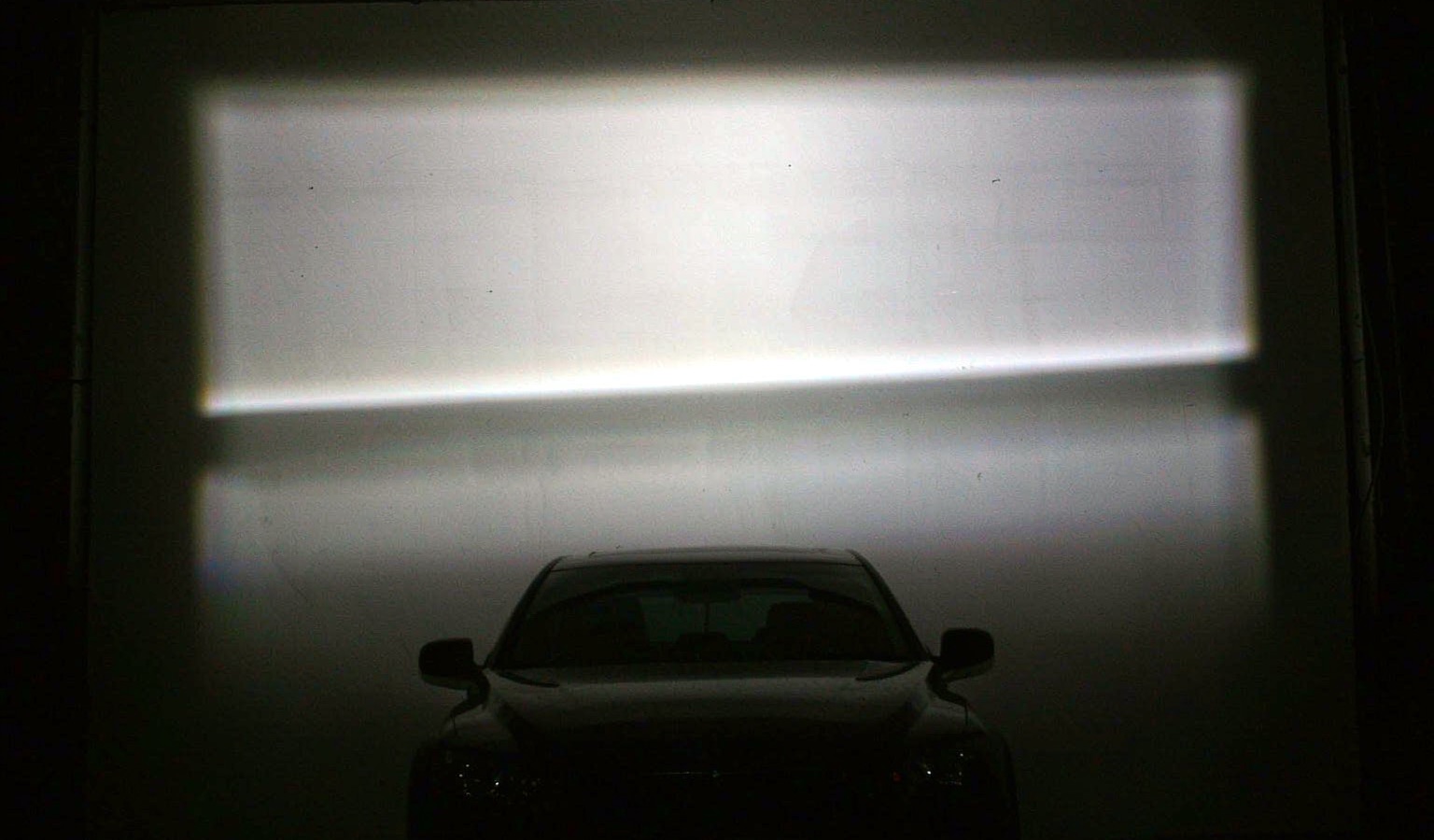
DOT (FMVSS 108) sets a maximum ceiling on light output and lets manufacturers self-certify. ECE sets a precise beam pattern with a hard cutoff and requires third-party type approval with an 'E' mark. Roughly: DOT caps how bright you may be; ECE shapes exactly where the light goes.
| DOT (United States) | ECE (Europe + most of world) | |
|---|---|---|
| Governing rule | FMVSS 108 | ECE R112 / R149 |
| Approval mark | DOT stamp (self-certified) | 'E' mark (type-approved) |
| Beam philosophy | Max output ceiling | Precise cutoff, shaped beam |
| Who approves | Manufacturer self-certifies | Independent test lab |
| Common in | USA, Canada (CMVSS similar) | EU, UK, Gulf, Asia, LatAm, Africa |
How to Read the Marks on the Glass
- DOT — a raised 'DOT' with a number is the US self-certification. It is not a performance grade, just proof the maker filed the paperwork.
- 'E' mark — a capital E in a circle or rectangle (E1 Germany, E4 Netherlands, E11 UK, etc.) means a government-approved lab tested the beam.
- ECE R112 / R149 — the regulation the 'E' mark was granted under. R149 is the newer unified beam rule replacing older R112 categories.
- SAE — often seen with DOT; it is a society standard, not a legal approval on its own.
An 'E' mark alone does not make a retrofit LED legal everywhere. Many markets only approve the original halogen housing. The mark proves the bulb's beam was tested in a compliant projector — not that your specific car is allowed to run it.
The Retrofit Reality Buyers Hate Hearing
Here is the part that surprises importers: in both systems, dropping an LED into a headlight housing designed for a halogen is often not formally approved, because the reflector was never certified for that source. The bulb may carry a valid 'E' or DOT mark, yet the combination is unapproved. Markets enforce this differently — some ignore it, others fail vehicles at inspection.
If you resell, lead with housings or complete LED headlight assemblies that are type-approved as a unit. A loose LED bulb with an 'E' mark but no housing approval is the single most common reason a shipment gets questioned.
What This Means for Importing and Reselling
- Sell into the US: confirm FMVSS 108 self-certification documents exist and the packaging carries the DOT mark.
- Sell into Europe / Gulf / most of Asia and LatAm: require an 'E' mark from a recognised authority and keep the type-approval certificate on file.
- Label by destination. A box marked only 'ECE' will not satisfy a US buyer, and a DOT-only box fails EU customs.
- Keep certificates, not just marks. Buyers and auditors ask for the paper, not the stamp on the glass.
The quality and certification page at Chedina LED lists the marks we hold, and our OEM/ODM page covers packaging and logo customisation. Coloured or animated lighting — halo rings, devil eyes, dynamic DRL displays — follows a different set of rules: our road-legality guide for dynamic LED eye displays covers colour limits, off-road labelling and what to ask a supplier.
Frequently Asked Questions
Is DOT-Approved LED Lighting Legal for Highway Use?
Short answer: the DOT mark makes the product legal to sell in the US, but it does not by itself make every LED retrofit legal to drive on the highway. DOT under FMVSS 108 is a manufacturer self-certification — the maker declares the lamp meets the standard and stamps DOT on the lens. It is not a lab certificate and not a permit for a particular car. Highway legality depends on the complete headlamp assembly, how the beam is aimed, and the retrofit rules of the state or country you drive in. A loose LED bulb dropped into a reflector designed for halogen is often not a formally approved combination even when the box carries a valid DOT mark. If a buyer asks for an ECE certificate or ECE-approved light, what they actually need is the type-approval certificate behind the E mark — not a photo of the stamp on the glass.
Approval Numbers Decoded: ECE R112, R149, SAE and the DOT Beam Pattern
| Mark / number | What it actually certifies | Where it applies | What to request from a supplier |
|---|---|---|---|
| ECE R112 | Older UN type approval for headlamps producing an asymmetrical passing beam | EU, UK, Gulf, much of Asia and LatAm | Type-approval certificate quoting R112 |
| ECE R149 | Newer UN rule consolidating older R112, R113 and R98 device categories | Same ECE markets, newer approvals | Certificate stating R149 plus the approval number |
| E1 / E4 / E11 | Country code of the authority that granted ECE approval (DE / NL / UK) | Printed beside the E mark | The full certificate, not just the lens stamp |
| DOT / FMVSS 108 | US self-certification with a maximum-output beam philosophy; no third-party lab | USA (Canada uses CMVSS 108) | FMVSS 108 self-certification file and DOT mark on the box |
| SAE J-series | Industry test methods from SAE International, not a legal approval on their own | Usually quoted next to DOT in North America | Which SAE test was run, plus the legal mark for the destination |
Is DOT or ECE stricter?
Different, not simply stricter. DOT caps maximum output and relies on self-certification; ECE enforces a precise beam cutoff through independent type approval. ECE is usually harder to pass because a lab measures the actual beam shape.
Can I sell DOT-marked lights in Europe?
No. Europe requires an 'E' mark under ECE. A DOT stamp alone will not clear EU or Gulf customs and fails most inspections there.
Does an 'E' mark make my LED bulb road-legal?
It proves the bulb's beam was type-approved in a compliant projector. It does not automatically approve retrofitting it into a halogen housing — that depends on local retrofit rules, which vary.
Which markets use ECE?
Most of the world: the EU, UK, Gulf states, most of Asia, Latin America and Africa. The main DOT market is the United States, with Canada running a similar CMVSS system.
Are coloured or animated LED lights (halo rings, devil eyes, DRL displays) legal on the road?
Generally not for forward-facing use on public roads. Both DOT and ECE rules reserve front lighting for white or selective amber, and red, blue, green, colour-shifting and flashing patterns are not approved. Chedina LED supplies these products for show, off-road, interior and ambient applications, not as road-approved headlamps. Enforcement is local, so confirm with your authority before fitting.
Is DOT-approved LED lighting legal for highways?
The DOT mark means the manufacturer self-certified the lamp to FMVSS 108, so the product can be sold in the US. It does not automatically approve fitting that LED into a halogen housing. Highway use also depends on the assembly, beam aim and local retrofit rules. Ask for the FMVSS 108 file and check your state rules before treating a DOT stamp as blanket road approval.
What is ECE R112 for LED headlights?
R112 is the UN regulation for headlamps emitting an asymmetrical passing beam, and it is the number most older ECE certificates quote. It is being consolidated into R149 for newer approvals. In either case the number describes the beam test the whole lamp passed — it is not a rating for a loose retrofit bulb.
Is SAE the same as ECE or DOT approval?
No. SAE International writes voluntary test standards (the J-series) that describe how to measure a lamp. ECE and DOT are legal approval frameworks tied to a market. An SAE test report is useful evidence, but it cannot replace an E mark in Europe or a DOT self-certification in the US.
What does the DOT beam pattern differ from the ECE one?
DOT caps maximum output and is comparatively tolerant of the beam edge; ECE demands a sharp horizontal cutoff with a defined kick-up and measures it in a lab. That is why a lamp tuned for one market often cannot be sold into the other without re-tooling the optics. For when you must actually switch the lights on, see our headlight law guide.
Shop LED headlight bulbs by size
Wholesale buyers order by socket, not by series code. Pick a base to see the Chedina models listed for it, with specs and a quote path — and confirm the exact base before ordering.
Related reading
Short answers to the questions buyers ask us most.