
Short answer from the Chedina LED technical team: forward-facing coloured or animated lighting is not approved for public roads in either DOT or ECE markets. Front lamps are white, or selective amber for indicators, they stay steady, and the complete assembly has to be approved for that function. Red, blue, green, colour-shifting and flashing displays belong on show cars, off-road builds, interiors and ambient installations. That is why the intended use and destination market must be confirmed before an order is placed.
The Short Answer
If a product is sold as a programmable colour display, treat it as show or off-road equipment. A DOT or ECE mark on a headlight bulb does not legalise a colour display fitted to the same vehicle — the two are different products under different rules.
Buyers usually arrive with one phrase — 'angel eyes' — for two quite different things. BMW-style halo rings are a lighting feature built into a headlamp assembly. Devil eyes and dynamic eye displays are programmable LED matrices that show logos, animations or text. This guide is about the second group, plus the colour and animation rules that both groups run into. The DOT vs ECE guide covers the headlamp approval side in detail.
What the Rules Actually Restrict
- Colour of forward-facing light. White for headlamps and most DRL, selective amber for indicators. Red, blue, green and mixed colours facing forwards are not approved for road use.
- Animation and flashing. Strobing, chasing, colour-cycling and scrolling text on a moving vehicle fall outside the steady-light requirement in both systems. Emergency-vehicle colours are a separate, stricter issue.
- Position on the vehicle. Interior, dashboard, footwell and rear-cabin displays are treated differently from anything visible from the front. Mounting position often decides the answer before the product does.
- The approved unit. Approval is granted to a complete lamp or assembly with a defined beam, not to a loose display panel. Swapping the light source or adding one changes what was approved.
- Local enforcement. DOT (FMVSS 108) and ECE type approval set the framework; national inspection rules and police practice decide how it is applied. When a market is unclear, Chedina LED asks the importer to confirm in writing before we quote.
Where Coloured and Animated Lighting Is Normally Used
| Application | Public-road use? | What to specify |
|---|---|---|
| Show cars, exhibitions, photoshoot builds | No — display only | Static demo mode, show-use wording on the carton |
| Off-road and private land | Yes, off public roads | Off-road labelling, fused 12 V / 24 V harness |
| Interior, footwell, ambient trim | Usually acceptable | Low glare, nothing in the driver's sight line |
| Truck window / cab signage | Check local rules | Not forward-facing, switched off while driving |
| Headlamp or front DRL | White or amber, steady only | DOT or ECE documents for the complete assembly |
Angel Eyes, Halo Rings and Devil Eyes Are Three Different Products
- Angel eyes / halo rings — a ring-shaped light around the projector inside a headlamp. Legality is decided by the whole headlamp assembly and by the colour: white may be acceptable, colour-changing almost never is. Retrofitting rings into a factory housing also means opening a sealed unit, which brings its own water-ingress and beam-pattern risk.
- Devil eye / dynamic logo display — a programmable LED panel that shows graphics or animations, typically app-controlled. Our programmable LED devil eye with dynamic logo display is specified for show, off-road and ambient use, not as a headlamp replacement.
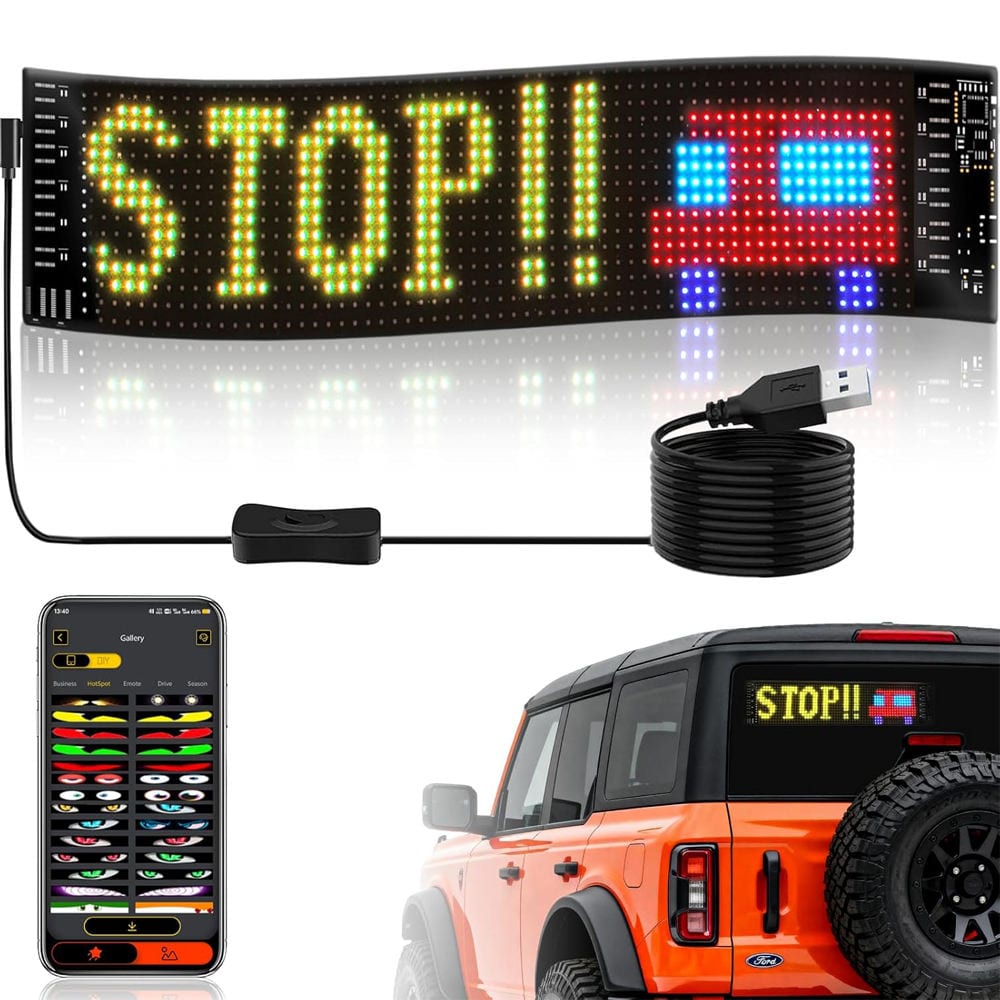
- Flexible transparent eye display — a thin, weatherproof panel for truck and vehicle glass. The waterproof flexible transparent LED dynamic eye display for trucks is a signage product; mounting position and local signage rules are what matter.
All three sit inside our LED atmosphere light range, which is why the first question we ask a new buyer is not 'which colour', but 'where will it be fitted and in which market'. A pallet for a show-car distributor and a pallet for a workshop fitting road-going headlamps need different cartons and different paperwork.
What Importers Should Ask Before a Bulk Order
- Name the destination market and the intended application first. Check the quality and certification page for the marks currently held, but remember a display and a headlamp never share the same approval file.
- Ask the supplier to state the product category in writing: lighting, signage, or ambient accessory. Vague wording is what gets a shipment questioned at the port.
- Confirm the carton and manual say show / off-road / interior use where that is the intended use. Labelling rules vary by destination, so agree the wording with your importer before printing — our OEM/ODM page lists the customisation options.
- Never let a reseller describe a colour display as 'DOT approved'. The DOT vs ECE guide explains why a headlamp mark cannot cover an added display.
- If headlight bulbs are in the same order, confirm sockets separately — the bulb size index lists H4, H7, H11 and 9005 with their fitments. Mixed containers are normal; mixed assumptions cause returns.
Practical fitment note: wire a display to an ignition- or parking-switched circuit so it can be off on public roads, keep it out of the driver's sight line, and keep the approval paperwork for the actual headlamps in the vehicle file. That is the setup most installers end up with after an inspection.
Frequently Asked Questions
Are LED devil eyes legal on public roads?
Not as forward-facing lighting in DOT or ECE markets. Front lighting is limited to white or selective amber and must stay steady, while programmable displays are coloured and animated by design. Chedina LED supplies them for show, off-road, interior and ambient use, not as road-approved headlamps. Enforcement is local, so check with your authority before fitting.
Can halo rings or angel eyes be used as daytime running lights?
Only in white, and only if the complete headlamp assembly is approved for that function in your market. Opening a sealed factory housing to add rings can void the approval and cause condensation or a poor beam pattern. A colour-changing ring is not road-legal forward lighting.
Does a DOT or ECE mark make a dynamic display road-legal?
No. Those marks apply to the beam and construction of a headlamp or a complete lamp assembly. A programmable display is a separate product with no headlamp beam function, so a mark on the bulb or housing does not extend to it.
What should I ask Chedina LED before ordering these displays?
Tell us the destination country, where the panel will be mounted, and whether it will ever be visible from the front while driving. We then confirm the product category, the intended use, the voltage (12 V or 24 V) and the control option. Which documents apply depends on the destination, so check our quality page and your local authority before ordering.
Shop LED headlight bulbs by size
Wholesale buyers order by socket, not by series code. Pick a base to see the Chedina models listed for it, with specs and a quote path — and confirm the exact base before ordering.
Related reading
Short answers to the questions buyers ask us most.