
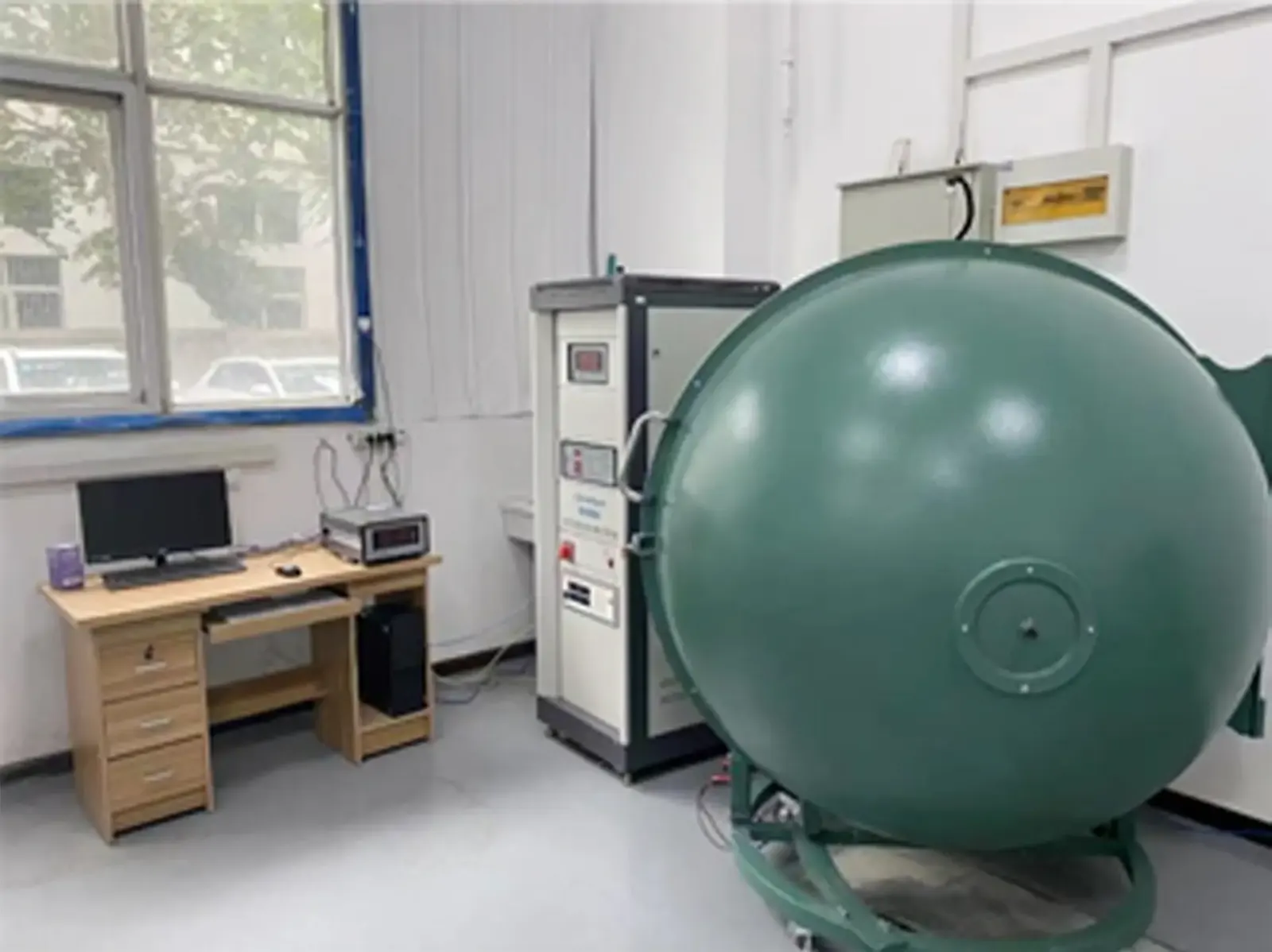
As halogen-to-LED upgrades become standard in the global automotive aftermarket, headlight manufacturers face two primary engineering hurdles: persistent thermal degradation and optical beam distortion. Unlike halogen filaments, which dissipate heat through radiation, LED junction temperatures ($T_j$) must be managed via direct conduction and forced convection. Excessive thermal buildup not only causes immediate lumen depreciation but also significantly reduces chip lifespan and shifts color temperatures.
Thermoelectric Separation Technology To maintain high luminous efficacy (>120 lm/W) in compact headlight housings, modern OEM/ODM manufacturing utilizes Thermoelectric Separation Copper PCBs (Direct Thermal Path). By soldering the LED die directly to a raised copper pad without an insulating dielectric layer underneath, thermal resistance ($R_{th}$) is reduced to less than 0.5°C/W.Heat generated at the junction is rapidly conducted away from the light source along the high-conductivity copper core ($401 \text{ W/m}\cdot\text{K}$) toward the rear heat sink. Integrated liquid-filled vacuum heat pipes further accelerate heat transport to a high-density anodized aluminum fin array, cooled actively by a 12,000 RPM hydraulic silent fan. This architecture maintains junction temperatures below 90°C during continuous 24/7 operation, preventing early chip failure (infant mortality) and ensuring steady-state optical stability.
Achieving a sharp, glare-free beam pattern compliant with ECE R112 and DOT FMVSS 108 standards requires precise alignment of the LED emitter array. The light-emitting surface (LES) of the LED chip must identically replicate the focal position, thickness, and dimensions of a standard tungsten halogen filament (e.g., H7 or H11)
- 1:1 Filament Alignment: Modern precision tooling places LED emitters with a tolerance within ±0.1mm of the original focal point.
- Ultra-Thin PCB Design: Reducing PCB substrate thickness to 1.0mm minimizes the central "dark zone," producing a continuous 360-degree light distribution without shadows or dead angles.
- Optical Photometrics: Automated goniophotometers verify that the resulting low-beam pattern displays a distinct 15-degree asymmetric cut-off angle, directing maximum illuminance toward the road surface while maintaining strict glare control below the horizon line.
When evaluating high-performance automotive LED bulbs, B2B importers must look beyond raw "peak lumens." Long-term thermal resistance parameters, high-grade copper PCB substrates, and optical geometric precision are the true indicators of a high-margin, low-return product line.